Part of the Insider Trading Tracker guide.
Reading a fresh Schedule 13D: stake size, urgency, and accumulation
A research note on how to parse a new 5% activist filing without mistaking ownership math for a catalyst calendar.
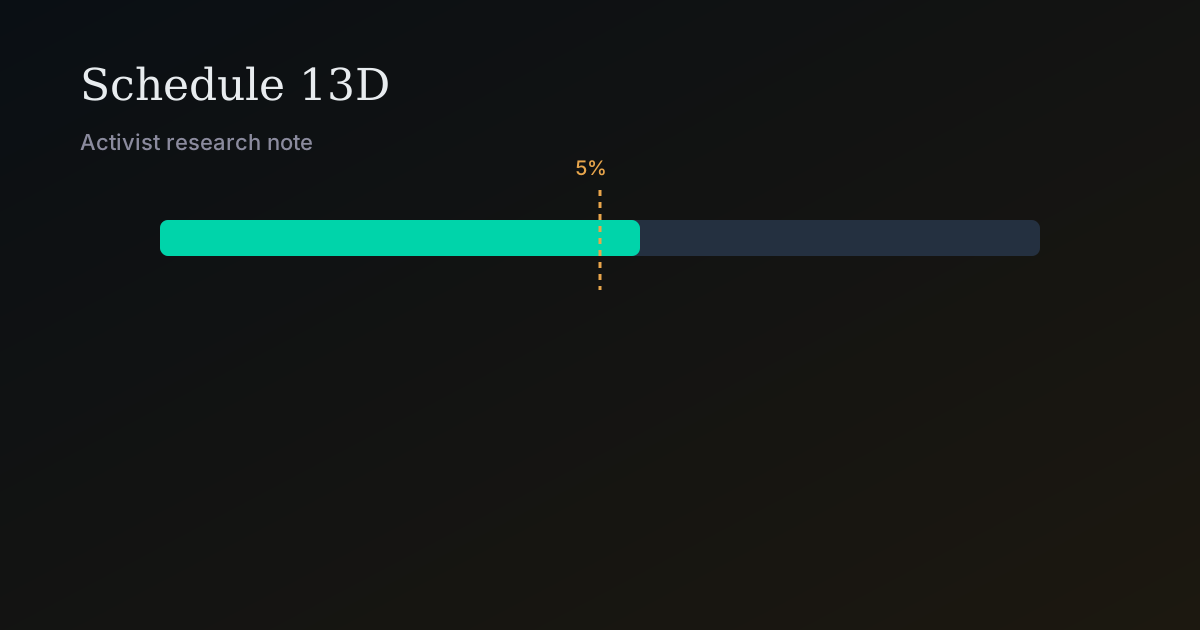
What a fresh 13D establishes
A Schedule 13D tells the market that a person or group has acquired beneficial ownership of more than 5% of a voting class and may seek to influence the issuer. It is a disclosure obligation, not a strategy memo.
Passive investors who certify they hold without activist intent generally use Schedule 13G instead. Crossing from 13G to 13D - or amending a 13D with a new purpose - is often the more informative event than the initial 5.1% print.
Stake size and power
Look past the headline percentage. Sole versus shared voting and dispositive power clarifies how much of the stake the filer can actually direct. Shared power through groups can inflate the economic story while diluting control.
Compare the reported stake to prior amendments when available. Rapid step-ups in ownership over a short window raise accumulation-velocity scores; a one-time crossing at 5.1% is a thinner signal.
Purpose clauses
Item 4 purpose-of-transaction language ranges from 'investment purposes' to explicit board or strategic agendas. Read it literally and skeptically: boilerplate investment language does not preclude later activism, and aggressive language does not guarantee a campaign succeeds.
How we score it
The 13D Greediness Score emphasizes stake size, urgency of filing, and accumulation velocity - structural features of the disclosure. It does not predict whether the activist wins seats, forces a sale, or underperforms.
Final takeaway
Treat a new 13D as the start of a research file: ownership math, purpose language, and amendment history. Use the Activist tab to prioritize filings, then read the primary document on EDGAR before acting on any narrative.
Sources
Related articles
- Schedule 13D vs 13G: activist vs passive ownership, explained
Schedule 13D and Schedule 13G both disclose large beneficial ownership, but 13D is the activist-oriented form. Here is how they differ, what to read first on a fresh 13D, and how Greedy Insider scores activist filings.
- What is a Form 4? How to read SEC insider transaction filings
A Form 4 is the SEC filing a company insider must submit within two business days of trading their company stock. Here is how to read who filed, which transaction codes carry information, and what a Form 4 does not tell you.
- NVIDIA cluster buy: three directors add after the pullback
Three NVIDIA directors filed open-market purchases within the same week after a multi-session drawdown. We unpack the Form 4 codes, stake impact, and how the Greediness Score weights the cluster.
Educational analysis only. Nothing on this page is investment advice. The Greediness Score describes filing structure and does not predict returns.