Part of the Insider Trading Tracker guide.
STOCK Act disclosure lag: when Congress trades hit the public record late
A walkthrough of how periodic transaction reports create information delay - and how Greedy Insider scores disclosure timeliness.
What happened
Under the STOCK Act, members of Congress and certain staff must report securities transactions on periodic transaction reports. Unlike Form 4's two-business-day standard for corporate insiders, these disclosures often appear days or weeks after the trade date.
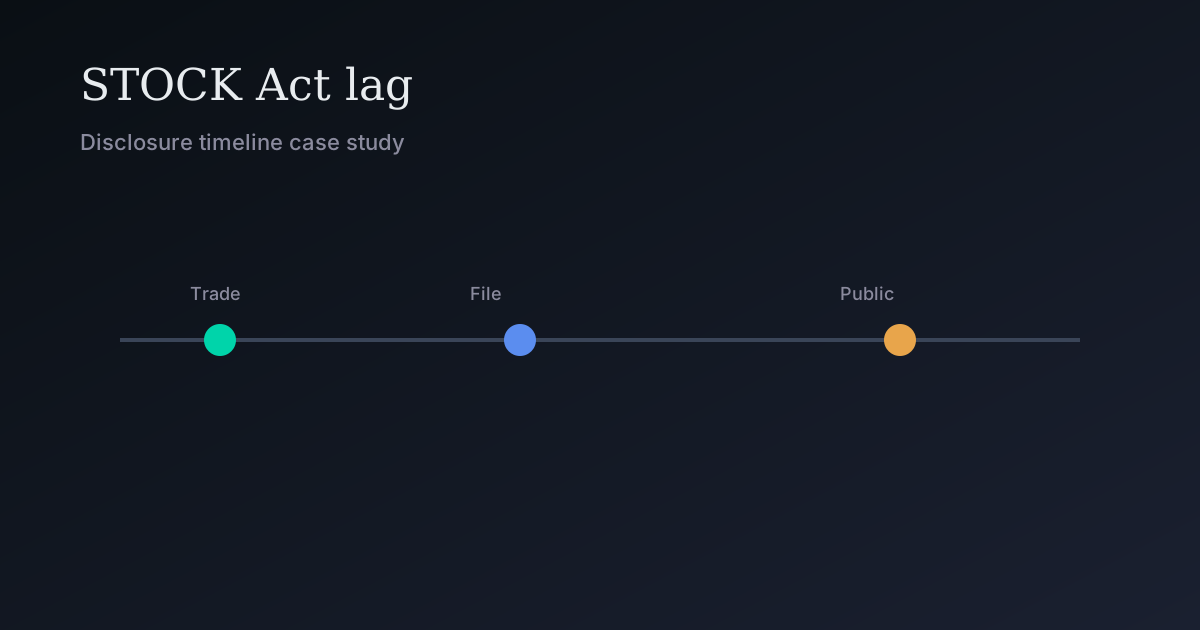
In a representative sequence: trade executes on day T, the report is signed later, and the public clerk posting is later still. Researchers who treat the disclosure date as the trade date systematically mis-time the event.
Timeline
- T+0 - Trade executed in the member's brokerage account.
- T+1 to T+30+ - Internal preparation and filing of the periodic transaction report.
- Public posting - House or Senate clerk publishes the PDF/XML; Greedy Insider ingests and scores it.
- Research window - Analysts compare trade date, disclosure date, and intervening news.
The gap between trade date and public posting is the disclosure lag. Large lags reduce the usefulness of the filing as a timely signal and increase the chance that price-moving news already intervened.
Why it matters
Congressional trading data is politically salient and easy to sensationalize. A disciplined reading starts with the clock: how late is the public learning about this trade?
Greedy Insider's Congressional Greediness Score treats disclosure timeliness as an explicit factor alongside size and context, so chronically late reports do not look identical to prompt ones.
Final takeaway
When you see a congressional trade headline, check the trade date against the disclosure date before assigning meaning. Lag is structural - score it, disclose it, and do not confuse delayed transparency with a trading edge.
Sources
Related articles
- Congressional trades explained: what the STOCK Act actually tells you
Under the STOCK Act, members of Congress must report securities transactions - often days or weeks after the trade. Here is what those disclosures establish, why lag matters, and how Greedy Insider scores them.
- What is a Form 4? How to read SEC insider transaction filings
A Form 4 is the SEC filing a company insider must submit within two business days of trading their company stock. Here is how to read who filed, which transaction codes carry information, and what a Form 4 does not tell you.
- NVIDIA cluster buy: three directors add after the pullback
Three NVIDIA directors filed open-market purchases within the same week after a multi-session drawdown. We unpack the Form 4 codes, stake impact, and how the Greediness Score weights the cluster.
Educational analysis only. Nothing on this page is investment advice. The Greediness Score describes filing structure and does not predict returns.